Why Quality Arborist Supplies Matter for Environmental Stewardship
Protecting urban forests and natural landscapes requires more than passion, it demands the right arborist supplies. As environmental awareness continues to grow, so does the need for high-quality tree care equipment and climbing gear. These tools play a critical role in maintaining tree health while ensuring that arboricultural practices remain efficient, safe, and environmentally responsible.
Proper tree care, such as pruning mature hardwoods in urban parks, helps preserve native species and maintain ecological balance. However, the tools used in these tasks are just as important as the techniques themselves. Professional arborists rely on specialized equipment not only to perform their work effectively but also to minimize their impact on surrounding ecosystems.
The Environmental Role of Professional Tree Equipment
Professional tree equipment forms the foundation of responsible arboriculture. It enables arborists to safely access tree canopies while reducing potential harm to trees and the environment. Modern arborist tools are specifically designed to minimize bark damage, prevent soil compaction, and avoid unnecessary removal of branches.
For example, friction savers are commonly used in climbing systems to protect tree bark from abrasion caused by ropes. Precision cutting tools also allow arborists to remove only what is necessary, preventing over-pruning and promoting healthier growth. These innovations align tree care practices with broader environmental sustainability goals, ensuring that maintenance efforts support long-term ecosystem health.
Safety as a Foundation for Sustainable Tree Care
Tree work often takes place at significant heights and in unpredictable conditions, making safety an essential component of sustainable arboriculture. Tree climbing requires a combination of physical skill, technical knowledge, and reliable equipment. Without proper gear, even experienced professionals face serious risks.
Protective equipment such as helmets with visors and hearing protection helps prevent injuries from falling debris. Anti-slip climbing boots improve stability on wet or uneven bark surfaces, reducing the likelihood of accidents. By prioritizing safety, arborists not only protect themselves but also ensure that their work can be carried out efficiently and without unnecessary environmental disruption.
Choosing the Right Arborist Supplies for Environmental Projects
Selecting appropriate arborist supplies depends largely on the scope and location of a project. Urban forestry often requires compact, lightweight tools that can be easily maneuvered in confined residential spaces. In contrast, conservation work in dense forests may demand heavy-duty ropes and rigging systems capable of supporting large canopy structures.
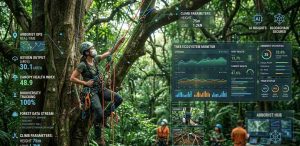
When evaluating equipment, professionals typically consider several key factors:
- Certification standards and load ratings
- Durability under varying weather conditions
- Compatibility with existing climbing systems
- Ergonomic design for long-term use
Investing in high-quality equipment offers long-term environmental benefits. Durable tools reduce waste by lasting longer and performing more reliably, while poorly made equipment can fail, create safety hazards, and contribute to unnecessary environmental impact. In this way, choosing quality over cost supports both sustainability and operational efficiency.
In case you are interested in broadening your environmental knowledge, you may also read the post “Preserving the Environment in a Sustainable Manner.” A look at the related resource can shed some light on how responsible equipment decisions can fit into a larger ecological approach.
Conclusion
Arboriculture exists at the intersection of environmental science, physical skill, and technical precision. High-quality arborist supplies empower professionals to care for trees responsibly while protecting both themselves and the ecosystems in which they work.
As environmental challenges continue to grow, investing in reliable climbing gear and tree care equipment is no longer just a practical decision; it is a commitment to sustainable stewardship. By combining safety, innovation, and environmental awareness, modern arborists can elevate both their performance and the standards of ecological care.
Safety, innovation, and environmental awareness, which are united in modern arboriculture, push the environmental standards and the performance of professionals even higher.