How Recovery Technologies Are Shaping More Sustainable Wellness Facilities
Wellness centers, fitness clubs, rehabilitation clinics, and recovery spaces continue to grow as more people prioritize preventive health and physical well-being. This expansion creates new opportunities for healthier communities, yet it also increases demand for electricity, water, building materials, and equipment. Reports from the International Energy Agency (IEA) show that buildings account for a significant share of global energy consumption and carbon dioxide emissions, making sustainable facility design an increasingly important consideration across many industries, including wellness.
As organizations modernize their recovery spaces, some evaluate technologies from companies such as Solbasium alongside broader sustainability strategies. Rather than focusing only on adding new amenities, facility planners increasingly consider equipment efficiency, maintenance requirements, expected lifespan, and long-term resource use. This wider perspective helps wellness operators balance user experience with environmental responsibility.
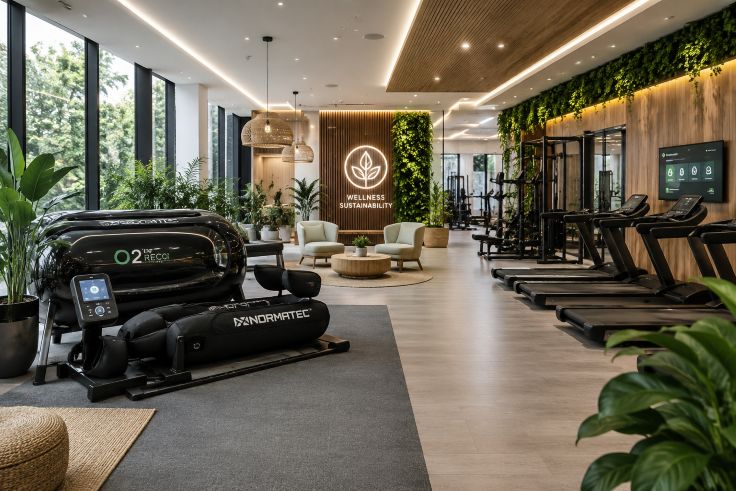
Environmental Challenges Facing Modern Wellness Facilities
Operating a wellness facility requires more than providing exercise or recovery services. Climate control systems, lighting, laundry operations, pools, saunas, steam rooms, and specialized equipment all contribute to energy use. Findings from the U.S. Environmental Protection Agency (EPA) emphasize that improving building efficiency remains one of the most effective ways organizations can reduce operational costs while lowering environmental impacts.
Many recovery amenities also depend on materials that require regular replacement. Upholstery, plumbing components, heating elements, disposable supplies, and electronic systems all create maintenance demands over time. When equipment reaches the end of its service life prematurely, additional manufacturing, transportation, and waste disposal contribute to the overall environmental footprint.
Water consumption presents another challenge. Hydrotherapy pools, showers, and spa facilities require continuous water treatment and temperature control. Research published by the United Nations Environment Programme (UNEP) highlights efficient water management as an important part of sustainable commercial building operations.
How Equipment Efficiency Supports Sustainability Goals
Choosing durable equipment often delivers environmental benefits that extend beyond lower electricity use. Products designed for longer operational life reduce replacement frequency, minimizing manufacturing demand and reducing waste generation.
Experts from the International Organization for Standardization (ISO) note that life-cycle thinking has become an important framework for organizations seeking to understand the environmental impact of products throughout manufacturing, operation, maintenance, and disposal.
Maintenance also plays a major role. Equipment requiring fewer replacement parts or less frequent servicing generally consumes fewer resources throughout its useful life. Scheduled maintenance further helps systems perform efficiently, reducing unnecessary energy consumption while extending operational reliability.
Digital monitoring systems increasingly support these efforts by identifying maintenance needs before equipment performance declines. Preventive maintenance reduces unexpected failures and often extends asset life, supporting both financial and environmental objectives.
Traditional Recovery Amenities Compared With Newer Technologies
Traditional wellness facilities frequently include saunas, steam rooms, whirlpools, hot tubs, and hydrotherapy pools. These amenities remain valuable for many organizations, yet they often involve continuous heating, significant water usage, chemical treatment, and ongoing maintenance.
Technology-driven recovery solutions have expanded the range of available options. Light-based recovery systems, compression technologies, percussion devices, cryotherapy equipment, and digital recovery monitoring tools provide alternatives that may require different operational resources depending on installation and usage patterns.
Each approach presents advantages and trade-offs. Water-based amenities may serve multiple users simultaneously but generally demand higher utility consumption. Individual recovery technologies may reduce water use while introducing electronic components that require responsible manufacturing, maintenance, and eventual recycling.
Research published in the Journal of Cleaner Production suggests that evaluating environmental performance through full life-cycle assessment provides a more complete picture than considering energy use alone. Factors including manufacturing materials, transportation, maintenance frequency, repairability, and disposal all influence sustainability outcomes.
Recovery Technology as Part of Sustainable Infrastructure
Modern recovery technologies increasingly form part of larger sustainability initiatives rather than serving as isolated equipment purchases. Organizations often integrate these systems into broader facility planning that includes energy-efficient lighting, smart climate controls, renewable electricity where available, and environmentally responsible building materials. These decisions also reflect the growing connection between environmental health and human well-being, highlighting how healthier indoor environments can support both occupant wellness and long-term sustainability objectives.
Many newer recovery systems are designed with compact footprints that may simplify installation within existing buildings. This approach can reduce the need for major renovations, limiting construction waste while allowing facilities to update services gradually instead of replacing entire wellness areas.
Some recovery technology providers also emphasize modular equipment designs. Modular systems may allow individual components to be serviced or upgraded instead of replacing complete units. Findings from the Ellen MacArthur Foundation support repairability and modular design as important principles within circular economy strategies aimed at reducing waste.
Balancing Wellness Services With Environmental Responsibility
Organizations planning sustainable wellness facilities benefit from evaluating several practical considerations before investing in new recovery equipment.
- > Assess expected energy consumption over the equipment’s operational life.
- > Review maintenance schedules and replacement part availability.
- > Consider product durability alongside warranty support.
- > Evaluate water requirements where applicable.
- > Look for systems that integrate efficiently with existing building infrastructure.
- > Plan for responsible end-of-life recycling or disposal.
Decision-makers increasingly recognize that sustainability involves long-term operational performance rather than simply selecting the newest technology. Equipment that remains reliable for many years while requiring fewer repairs can contribute to lower environmental impacts and improved financial predictability.
Facility managers also benefit from collecting operational data after installation. Monitoring electricity use, maintenance frequency, occupancy levels, and equipment utilization helps organizations identify opportunities for continuous improvement while supporting measurable sustainability goals.
Looking Ahead
Sustainability continues to reshape how wellness facilities are designed, operated, and maintained. Growing attention to energy efficiency, equipment longevity, responsible resource management, and life-cycle planning encourages organizations to evaluate recovery technologies within the context of broader environmental objectives rather than isolated product features.
As innovation continues, future wellness spaces will likely combine efficient building design, smarter operational management, and evolving recovery solutions that support both user well-being and environmental responsibility. Organizations that consider long-term performance alongside immediate functionality will be better positioned to create facilities that remain effective, adaptable, and more sustainable for years to come.