Can Large Public Events Become More Sustainable? Examining the Role of Temporary Displays and Event Materials
The United Nations Environment Programme (UNEP) estimates that global waste generation could increase by nearly 70% by 2050 if current consumption patterns continue. Large public events, from trade shows and conferences to festivals and community gatherings, contribute to this challenge through significant material use, energy consumption, and waste production.
Event organizers are increasingly looking for ways to reduce environmental impact without compromising attendee experience. Research from MeetGreen, a sustainable event management consultancy, shows growing interest in reusable event infrastructure and waste-reduction strategies. Among the many event materials under review are branded displays, photo backdrops, and promotional signage. Information provided by step and repeat NYC reflects how organizers often evaluate backdrop and display solutions as part of broader event planning discussions.
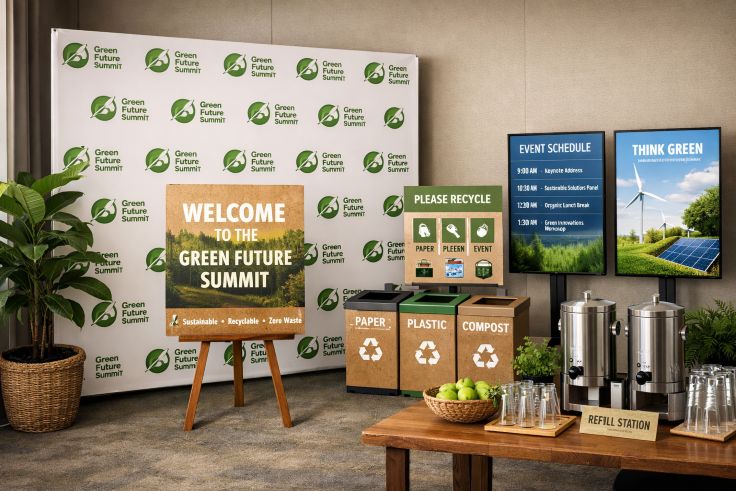
The Environmental Impact of Large-Scale Events
Large public events can generate considerable amounts of waste in a short period. Conferences may host thousands of attendees over several days, while outdoor festivals can attract even larger crowds. Temporary structures, printed materials, decorations, food packaging, and transportation all contribute to the overall environmental footprint.
The Events Industry Council (EIC) notes that event-related environmental impacts commonly include greenhouse gas emissions, water consumption, energy use, and landfill waste. While transportation often accounts for a substantial share of emissions, physical event materials also play a meaningful role.
Many event components are designed for short-term use. After an event concludes, banners, directional signs, promotional displays, and decorative elements may be discarded even if they were only used for a few hours.
Common Sources of Event-Related Waste
Understanding where waste originates is the first step toward reducing it. Event planners frequently identify several categories of materials that contribute to disposal challenges.
- Printed Signage and Promotional Materials. Flyers, brochures, posters, and informational signs are often produced in large quantities. While these materials can support attendee engagement, unused or outdated items frequently end up in recycling streams or landfills.
- Temporary Backdrops and Displays. Photo walls, branded backdrops, exhibit displays, and sponsor signage are common features at corporate and public events. Traditional materials may be difficult to reuse if designs include event-specific dates, logos, or messaging.
- Single-Use Decorations. Decorative elements created for one-time use can generate significant waste. Balloons, foam boards, disposable props, and certain plastic decorations often have limited reuse potential.
- Food Service Materials. Research published by World Wildlife Fund (WWF) highlights the environmental impact of food waste and disposable food packaging. Large gatherings frequently generate substantial amounts of both.
Sustainable Alternatives for Banners, Backdrops, and Signage
As sustainability becomes a greater priority, event professionals are exploring alternatives that extend material lifecycles and reduce waste generation.
Reusable Fabric Displays
Fabric-based banners and display systems are increasingly used because they can often be folded, stored, transported, and reused for multiple events. Unlike rigid disposable materials, some fabric graphics can be updated while retaining the same structural frame.
The Sustainable Event Alliance notes that extending product life is one of the most effective ways to reduce resource consumption over time.
Modular Display Systems
Modular exhibit structures allow organizers to replace graphics while keeping the primary framework intact. This approach reduces the need to manufacture entirely new displays for every event.
Trade show exhibitors often favor modular systems because they can be reconfigured for different booth sizes and event layouts.
Digital Signage
Digital screens can reduce reliance on printed materials by displaying schedules, announcements, sponsor information, and wayfinding content electronically. While screens require energy, they may reduce material consumption when used across multiple events.
The International Association of Exhibitions and Events (IAEE) reports that digital communication tools are becoming increasingly integrated into event management strategies for both operational and sustainability reasons.
Recyclable and Lower-Impact Materials
Some suppliers now offer recyclable substrates, responsibly sourced materials, and environmentally certified printing options. While these solutions do not eliminate waste entirely, they may reduce environmental impact compared with less sustainable alternatives.
How Event Organizers Evaluate Reusable Display Options
Selecting sustainable display materials involves balancing environmental goals with practical considerations. Event planners typically assess several factors before choosing signage and backdrop solutions.
- Expected lifespan of the display
- Storage and transportation requirements
- Ease of installation and dismantling
- Ability to update branding without replacing entire systems
- Recyclability or reuse potential after the event
- Total lifecycle cost rather than upfront price alone
Reusable photo backdrops, portable banner systems, and modular exhibit structures are frequently evaluated because they can support multiple events over time. For organizations that host recurring conferences, community events, or corporate functions, long-term reuse may help reduce material consumption while managing costs.
Challenges and Limitations of Reducing Event Waste
Despite growing interest in sustainability, reducing event waste is not always straightforward. One challenge is customization. Sponsors and exhibitors often want unique branding tailored to a specific event. Highly customized materials can be difficult to reuse once the event concludes.
Storage presents another obstacle. Reusable materials require space for transportation and long-term storage between events. Smaller organizations may not have the resources needed to manage inventory effectively.
Cost considerations also influence decision-making. Sustainable alternatives sometimes require higher initial investment, even when they provide savings over a longer period. Budget constraints may lead some organizers to choose lower-cost disposable options.
Research from McKinsey & Company suggests that sustainability initiatives frequently encounter implementation barriers despite widespread support for environmental goals. Event management is no exception.
Future Trends in Sustainable Event Management
The future of sustainable events will likely involve a combination of technology, material innovation, and improved planning practices.
Data-driven event management tools are helping organizers track waste generation, energy use, and material consumption more accurately. These insights can support better decision-making and identify opportunities for improvement.
Manufacturers continue developing recyclable fabrics, reusable display hardware, and lower-impact printing processes. Advances in material science may expand the range of environmentally responsible options available to event professionals.
Hybrid and virtual event formats may also influence sustainability efforts. While in-person experiences remain valuable, digital participation can reduce travel-related emissions and decrease demand for certain physical event materials.
Ultimately, sustainability in event management is not achieved through a single solution. It involves a series of practical decisions that collectively reduce environmental impact. Reusable displays, modular signage systems, recyclable materials, and thoughtful planning can all contribute to more responsible event operations. As environmental awareness continues to grow, organizers, suppliers, and venues are likely to place increasing emphasis on reducing waste while maintaining effective and engaging event experiences.
READ ALSO: Eco-Friendly Step and Repeat Banners | How to Minimize Waste & Carbon Footprint at Events
Conclusion
Large public events face legitimate sustainability challenges, particularly regarding temporary materials and waste generation. However, growing awareness and advances in reusable display systems, fabric backdrops, modular signage, and digital communication tools are creating new opportunities for improvement. While limitations remain, the shift toward reusable event graphics, portable display solutions, and lifecycle-focused planning suggests that the event industry is steadily moving toward more sustainable practices. Continued collaboration among organizers, venues, suppliers, and attendees will play an important role in shaping the future of environmentally responsible events.