How Structured Property Clearance Supports Urban Recycling and Waste Reduction in Vienna
Vienna processes hundreds of thousands of tons of municipal waste every year, with household-related materials forming a major part of this flow. Across European cities, data from Eurostat shows that recycling rates are steadily increasing, yet mixed household waste still remains a challenge for urban waste systems. The way properties are cleared during moves, renovations, or estate transitions plays a direct role in how efficiently materials are recovered or lost.
In Vienna, structured approaches to disposal are increasingly linked with environmental planning. Services such as Räumung Wien reflect a shift toward organized sorting before disposal, helping households and property managers separate reusable goods from true waste. This method aligns with broader European waste directives that encourage recycling at the source rather than at the landfill stage.
Environmental Impact of Unsorted Household Waste
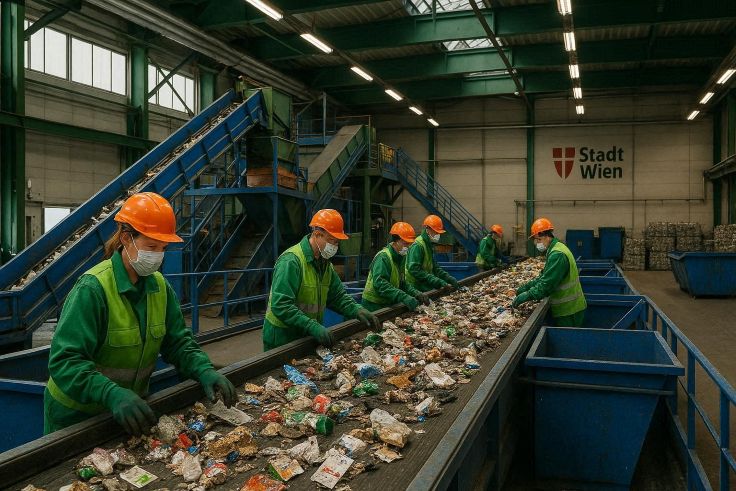
When household waste is not sorted properly, it often ends up as mixed residual waste. This creates a heavier burden on landfill sites and incineration facilities. Research from the European Environment Agency (EEA) highlights that mixed waste significantly reduces material recovery rates because recyclable components are contaminated.
Beyond landfill pressure, unsorted clearance also leads to missed opportunities for reuse. Furniture, electronics, and textiles often retain value even after use. In a circular economy model promoted by the European Commission, these items should remain in circulation as long as possible. However, without structured sorting, they are frequently destroyed or downcycled instead of reused. Broader environmental education also reinforces this idea, as explained in discussions on why recycling is important for the environment, where the long-term benefits of material recovery and reduced ecological pressure are emphasized.
How Professional Clearance Improves Recycling Efficiency
Professional property clearance services introduce an organized method to handling waste streams. Instead of treating everything as disposable, items are separated into categories such as wood, metal, plastics, textiles, and electronic components. This improves the efficiency of recycling facilities and reduces contamination rates.
Experts in urban waste management note that early-stage sorting is one of the most effective ways to improve recycling outcomes. Reusable furniture and appliances are often identified during clearance and redirected toward second-hand markets or donation channels. This step reduces unnecessary waste and supports resource recovery systems across Vienna.
In addition, certified recycling partnerships ensure that hazardous or complex materials, such as electronics, are processed according to environmental standards. This controlled flow helps cities comply with EU waste directives while reducing environmental risks.
Urban Systems in Vienna and Waste Processing Flow
Vienna’s waste management system is internationally recognized for its structured and regulated approach. The city’s municipal department, MA 48 (Waste Management, Street Cleaning, and Vehicle Fleet), oversees collection, sorting, and processing across residential and commercial zones.
Structured property clearance services complement this system by preparing materials before they enter municipal collection points. This reduces sorting pressure on public facilities and improves the overall efficiency of recycling streams. According to city waste reports, pre-sorted waste significantly increases recovery rates, particularly for metals and recyclable plastics.
By aligning private clearance practices with municipal infrastructure, Vienna strengthens its broader environmental targets, including landfill reduction and increased material reuse.
Practical Application in Residential Clearances
Structured clearance is especially relevant in dense urban housing contexts such as Vienna’s apartment blocks. During relocations, renovations, or estate settlements, large volumes of mixed items can accumulate quickly. Without organization, these materials often end up as general waste.
In a structured approach, items are first categorized on-site. Usable furniture is separated from damaged goods, while recyclables are sorted into defined material groups. For example, wood from broken cabinets may be redirected to recycling plants, while textiles are collected for reuse programs.
This method is particularly important in estate clearance situations, where entire households are processed at once. By applying systematic sorting, environmental impact is reduced while also improving logistical efficiency in high-density residential zones.
Environmental Role of Local Services (“Räumung Wien”)
Local clearance providers in Vienna contribute to environmental goals by integrating sorting-first principles into everyday operations. This approach reduces reliance on landfill disposal and supports recycling infrastructure across the city.
Studies in urban waste management show that early intervention in the waste stream significantly improves recovery outcomes. When materials are separated at the property level, recycling facilities can operate more efficiently, with lower contamination rates and higher material purity.
In practice, structured clearance services act as a bridge between households and municipal systems. They ensure that valuable materials do not enter the waste stream unnecessarily, supporting Vienna’s long-term sustainability objectives and reducing environmental strain.
Conclusion: Clearance as Part of Sustainable Urban Living
Structured property clearance is no longer just a logistical task. It is part of a broader environmental system that supports recycling, reuse, and responsible resource management. In cities like Vienna, where urban density and consumption patterns create continuous waste flows, organized clearance practices help maintain balance within municipal systems.
By focusing on sorting, recovery, and collaboration with recycling networks, property clearance becomes a key contributor to circular economy goals. The combined efforts of households, municipal services like MA 48, and structured clearance providers create a more efficient material lifecycle. Ultimately, this approach reduces landfill dependency and supports a more sustainable urban future where waste is treated as a recoverable resource rather than a final outcome.